India summons Pakistan's Charge d'Affaires after a collision at sea
A Pakistani naval vessel and an Indian warship collided in international waters on Tuesday evening. No major damage, but Delhi says the conduct broke Article 10 of a 1991 agreement.
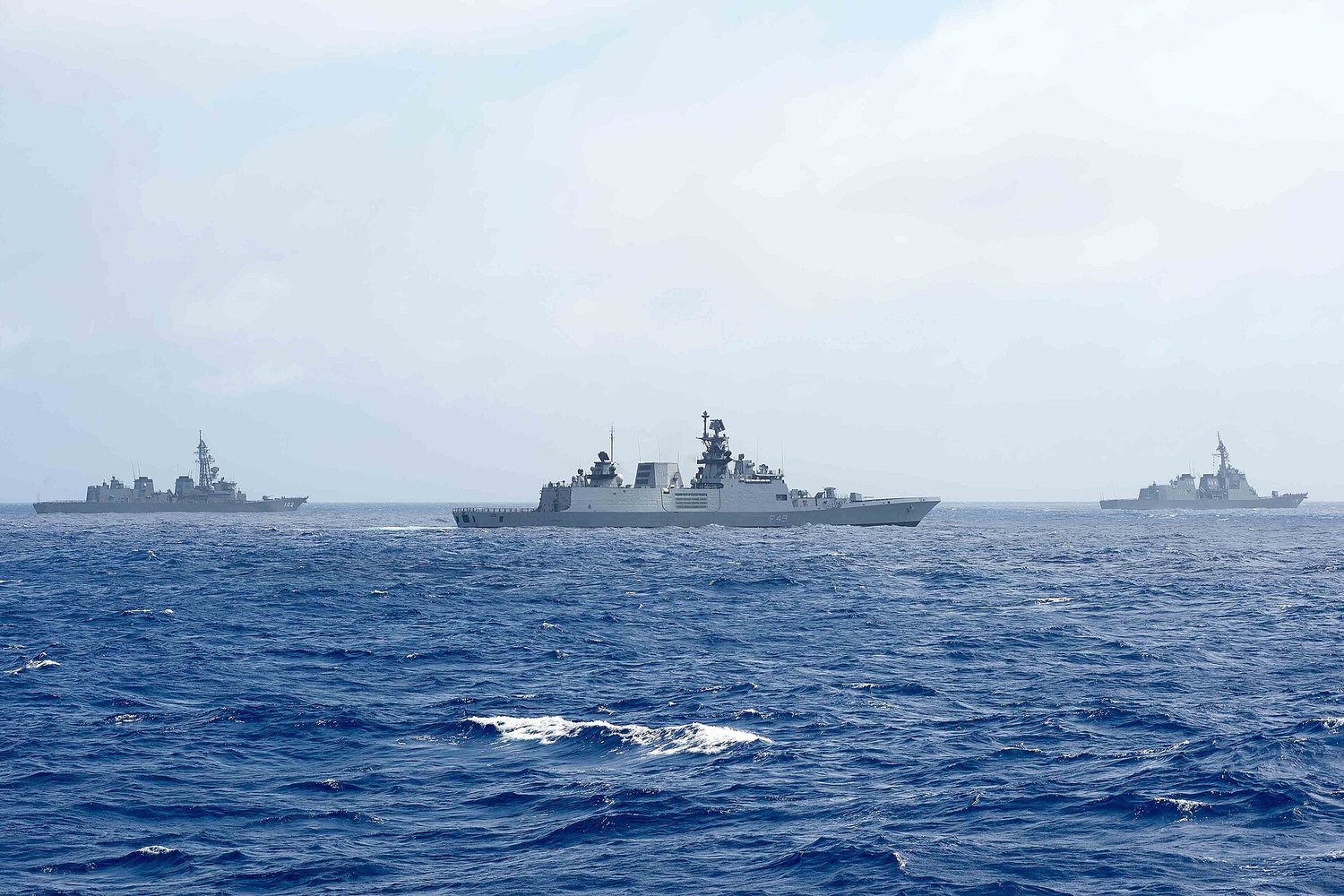
India summoned Pakistan's Charge d'Affaires in New Delhi on Wednesday and lodged a strong protest after a Pakistani naval vessel collided with an Indian Navy unit in international waters.
The Ministry of External Affairs said the incident caused no major damage. It described the conduct of the Pakistani naval units as "unacceptable and unprofessional".
What the ministry says happened
The collision took place in international waters. Beyond that, the ministry's statement is concerned less with the manoeuvre than with the agreement it says the manoeuvre broke.
India said the conduct of the Pakistani ship was in direct contravention of Article 10 of the April 1991 agreement between India and Pakistan on advance notice of military exercises, manoeuvres and troop movements.
The protest is framed as a breach of that agreement rather than as a complaint about damage.
The Charge d'Affaires was advised to tell his authorities that all military units need to exercise due care and observe the relevant agreements, to prevent any repeat.
India has also instructed its own Charge d'Affaires in Islamabad to lodge a similar protest with Pakistan's Ministry of Foreign Affairs. "The Charge d'Affaires of India in Islamabad has also been instructed to lodge a similar protest," the ministry said.
The Pakistani diplomat summoned was Saad Ahmad Warraich.
The incident itself
According to sources, a Pakistan Navy ship approached a frontline Indian Navy warship at high speed on the evening of 15 September, while the Indian vessel was on a routine surveillance mission in the North Arabian Sea.
The position given is roughly 220 kilometres east of Oman.
The Pakistani vessel is said to have manoeuvred in an unprofessional and unsafe manner, and the two ships collided. No damage was reported. Both ships moved away afterwards.
The types of vessel involved have not been identified.
Why the framing matters
Invoking Article 10 rather than simply complaining about seamanship places the incident inside a treaty framework, and India has kept its response within that frame. India has protested twice — in Delhi and in Islamabad — and asked for care to be taken in future. It has not announced any other measure.
Neither outlet carries a Pakistani account of the collision.
The precedent
This is the second time something of this kind has happened between the two navies.
In June 2011, the Pakistan Navy ship Babur and the Indian Navy ship Godavari were involved in a similar incident.
What the Indian account establishes this time is narrow: two ships came together in international waters, nobody was hurt, nothing was badly damaged, and the objection is to how one of them was handled.
Sources
- NDTV — Edited by Sanstuti Nath, published 16 Sep 12:43 IST. MEA summoned Saad Ahmad Warraich; "unacceptable and unprofessional conduct"; Article 10 of the 1991 agreement; India's CdA in Islamabad to lodge a similar protest; incident evening of 15 Sep, frontline warship on surveillance in the North Arabian Sea ~220km east of Oman; vessel types unidentified; both ships moved away; June 2011 PNS Babur and INS Godavari precedent.
- Mint — Prabhakar Jha, published 16 Sep 01:10 PM IST. MEA statement, international waters, no major damage; Article 10 of the April 1991 agreement; advice to convey due care; India's CdA in Islamabad instructed to protest; Pakistan Navy ship approached at high speed on the evening of 15 Sep during a routine surveillance mission.