One-horned rhino numbers pass 4,000 for the first time recorded
The global population has reached 4,075, with India holding 3,323 and Nepal around 752. Assam recorded no known poaching in 2022 and again in 2025.
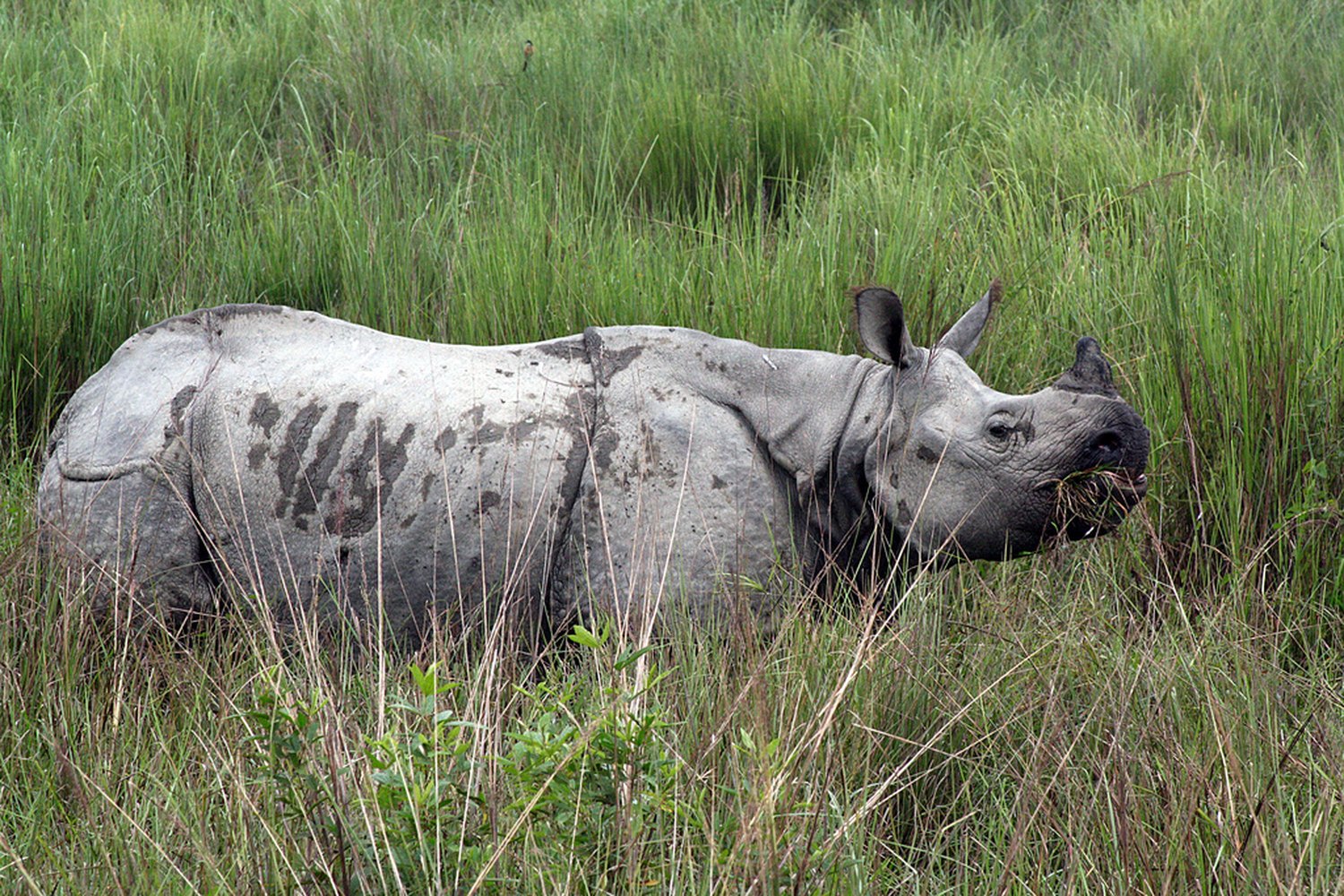
The global population of the greater one-horned rhinoceros has reached 4,075, passing 4,000 for the first time, Assam forest minister Jayanta Mallabaruah said.
Assam accounts for nearly 80% of the species. Kaziranga National Park alone shelters more than 2,600 rhinos.
The numbers
"India is home to 3,323 rhinos, while Nepal has around 752," the minister wrote on X.
He set the figure against where the species started the century. The global population was fewer than 100 in the early 1900s.
From under 100 to over 4,000 across roughly 120 years is the arc that makes this one of the more substantial recoveries in conservation, and the minister said Assam's contribution to it was particularly significant.
"Assam's success in protecting the greater one-horned rhinoceros is contributing significantly to one of the world's most encouraging wildlife conservation recoveries," he said.
He attributed the result to strengthened protection, field-level enforcement and sustained conservation action.
The poaching record
The clearest measure of the change is the poaching figures, which the state government has published year by year.
Between 2000 and 2021, at least 191 rhinos were poached in Assam. The worst years were 2013 and 2014, with 27 killed in each.
The decline after that is steep: 17 in 2015, 18 in 2016, six in 2017, seven in 2018, three in 2019, two in 2020 and one in 2021.
Assam then recorded zero known rhino poaching cases in 2022 — the first time since the 1970s — and repeated it in 2025.
Those are known cases, which is the qualifier that matters. A zero is a statement about what enforcement detected as well as about what happened.
What changed on the ground
In June 2021 the state government announced a Special Anti-Poaching Task Force, formed jointly by the forest and police departments for coordinated action.
It also intensified intelligence gathering, joint operations, patrolling and surveillance, including the use of drones and CCTV cameras.
The pairing of forest and police departments addresses the structural problem in wildlife enforcement: a forest department has jurisdiction over the park but limited capacity to pursue a network beyond it, while police have the reverse.
The recognition
Assam's zero-poaching years drew international attention, and the actor Leonardo DiCaprio was among those who praised the effort.
Why the concentration is a risk as well as an achievement
Eighty per cent of a species in one state, and more than 2,600 of them in a single national park, is a recovery and an exposure at the same time.
A population that dense in one place is vulnerable to a single event — a flood, a disease outbreak, a change in protection — in a way a dispersed one is not. Kaziranga floods most years.
The minister's statement does not address distribution, and the figures given do not break the Indian total down beyond Assam's share.
What the number counts
The 4,075 figure is a global population estimate for the species, spanning India and Nepal. No separate figure for any other range country is given in this account.