Macy's raises guidance after comparable sales rise 2.7%
Bloomingdale's grew 11.3% and the namesake chain 1.1%. The company is putting $96m of tariff refunds into stores rather than into price cuts.
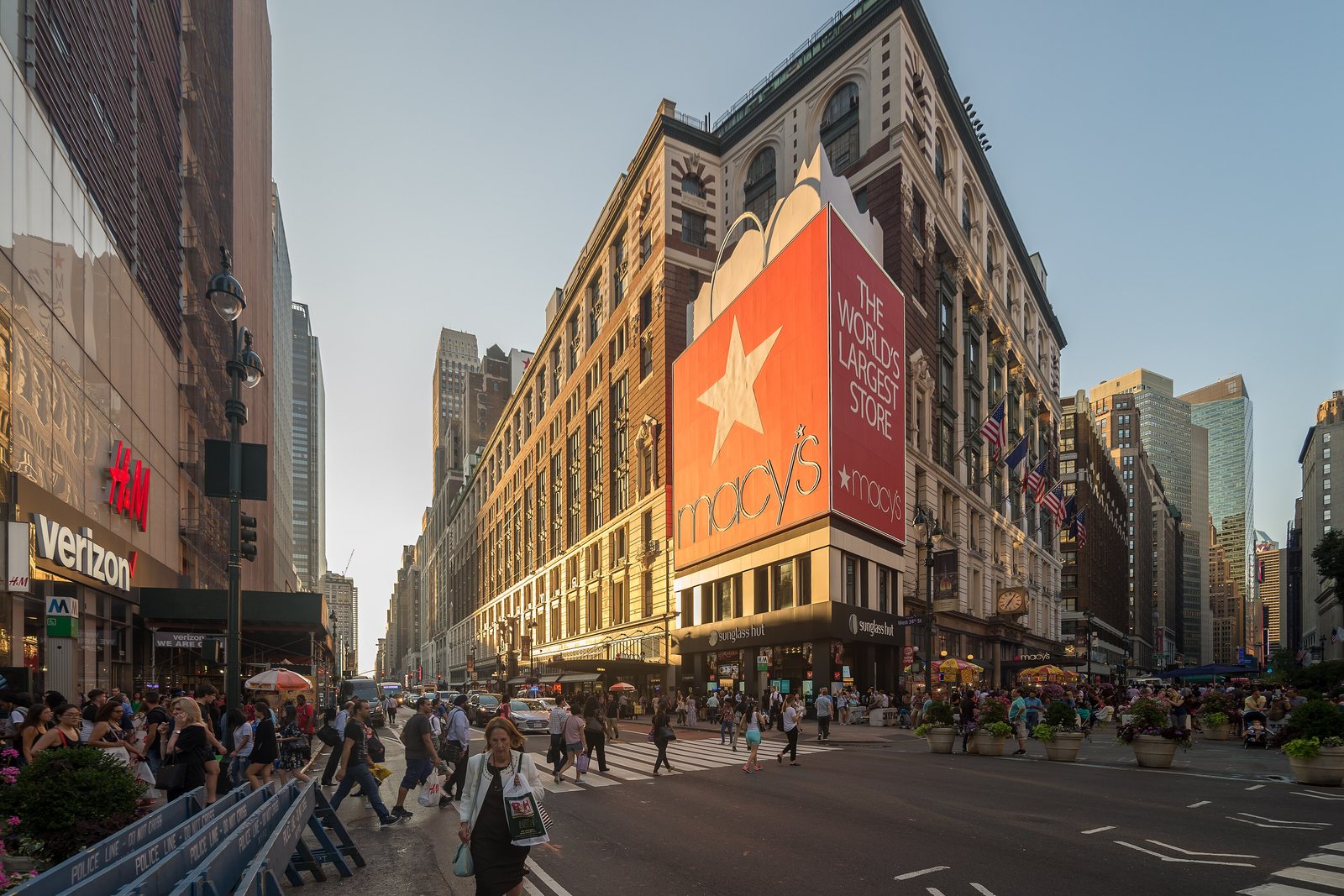
Macy's raised its full-year guidance on Thursday after comparable sales rose 2.7% in its fiscal second quarter, a rare piece of good news from an American department store and the clearest evidence yet that its turnaround is producing numbers rather than plans.
Net income more than doubled to $169 million, or 62 cents a share, against $87 million, or 31 cents, a year earlier. Stripping out one-off items, adjusted earnings came in at 40 cents a share against the 37 cents analysts surveyed by LSEG had expected. Revenue of about $4.87bn beat a $4.83bn forecast, though it was barely ahead of the $4.81bn recorded a year ago — growth here is coming from margin and mix, not from a surge in customers.
Where the growth is
The three nameplates performed very differently. Bloomingdale's, the group's higher-end chain, posted an 11.3% rise in comparable sales. Bluemercury, its beauty business, was up 6.2%. The Macy's brand itself managed 1.1%.
That spread is the company's strategy stated as arithmetic. Most of the growth at the namesake chain came from what Macy's calls its reimagined stores — locations rebuilt with better assortments, more staff on the floor and stronger merchandise displays. The chief executive, Tony Spring, said those stores have improved the experience rather than simply the discounting, and that Bloomingdale's has held its higher-income shopper by staying both accessible and differentiated.
"I think it's a different Macy's Inc. today," Spring told CNBC. "We're in a healthier position."
The guidance, and what sits inside it
Macy's now expects full-year net sales of $21.68bn to $21.83bn, up from a previous range of $21.5bn to $21.75bn. Comparable sales guidance rose from growth of 0.5% to 1.2% to a range of 1% to 1.5%. Full-year earnings per share guidance went to $2.15 to $2.35, from $2 to $2.20.
About five cents of that per-share increase comes from tariff repayments rather than from trading. The company has received $116 million in tariff refunds, and the decision it took with the money is the most revealing thing in the results.
Roughly $96 million of it is going into the customer experience and the turnaround programme. It is not going into price cuts, a step several retailers have taken to hold on to shoppers with less to spend.
Spring said the reinvestment was directed at things "beyond one-time benefits" that would have lasting power behind the strategy. A portion of the refunds is being held back because of uncertainty over fuel costs — a sensible reservation in a week when crude passed $100 a barrel.
Two customers, not one
Spring described a market splitting by income, with the company positioned to serve both ends. Shoppers with discretionary income are spending on fashion; those without are being far more selective. Bloomingdale's up 11.3% and the Macy's brand up 1.1% is what that division looks like on a single set of books.
Credit card revenue rose 2%, or $3 million, in the quarter, which the company attributed to a healthy credit portfolio and stable losses. In a downturn, the credit line is often the first place a retailer's customer base shows strain, and it did not show much here.
Investors were unmoved. Macy's shares slipped slightly in morning trading despite the beat and the raised outlook — a reminder that a stock which has been rated as a structural decline story does not re-rate on one quarter.
Why this is harder than it looks
The department store has been the losing format in American retail for two decades, squeezed between specialist chains, off-price rivals and online sellers with lower fixed costs. Space that once justified itself by breadth of range is now expensive to heat, staff and stock. Most attempts at revival have amounted to closing stores faster than sales fall, which stabilises a business without growing it.
What Macy's is claiming is different: that a store rebuilt properly can grow comparable sales even while the format is in decline nationally, and that doing it across enough locations changes the trajectory of the company. The 2.7% group figure is the first substantial evidence for that claim, and the 1.1% at the core brand is a reminder of how far it still has to travel.
The second half will test it. Retailers make the bulk of their profit in the run to Christmas, and this year they will do so with energy prices climbing, borrowing costs high and consumers cautious about big-ticket purchases. Spring's decision to spend the tariff windfall on stores rather than on markdowns is a bet that the customer will still be there in November.
On this quarter, Macy's has earned the right to make that bet. It has not yet won it.