Goyal asks BRICS for a common trade platform and a women's fund
An invoice a lender can see is an invoice a lender can lend against. India's commerce minister wants the Jaipur agreement turned into working plumbing.
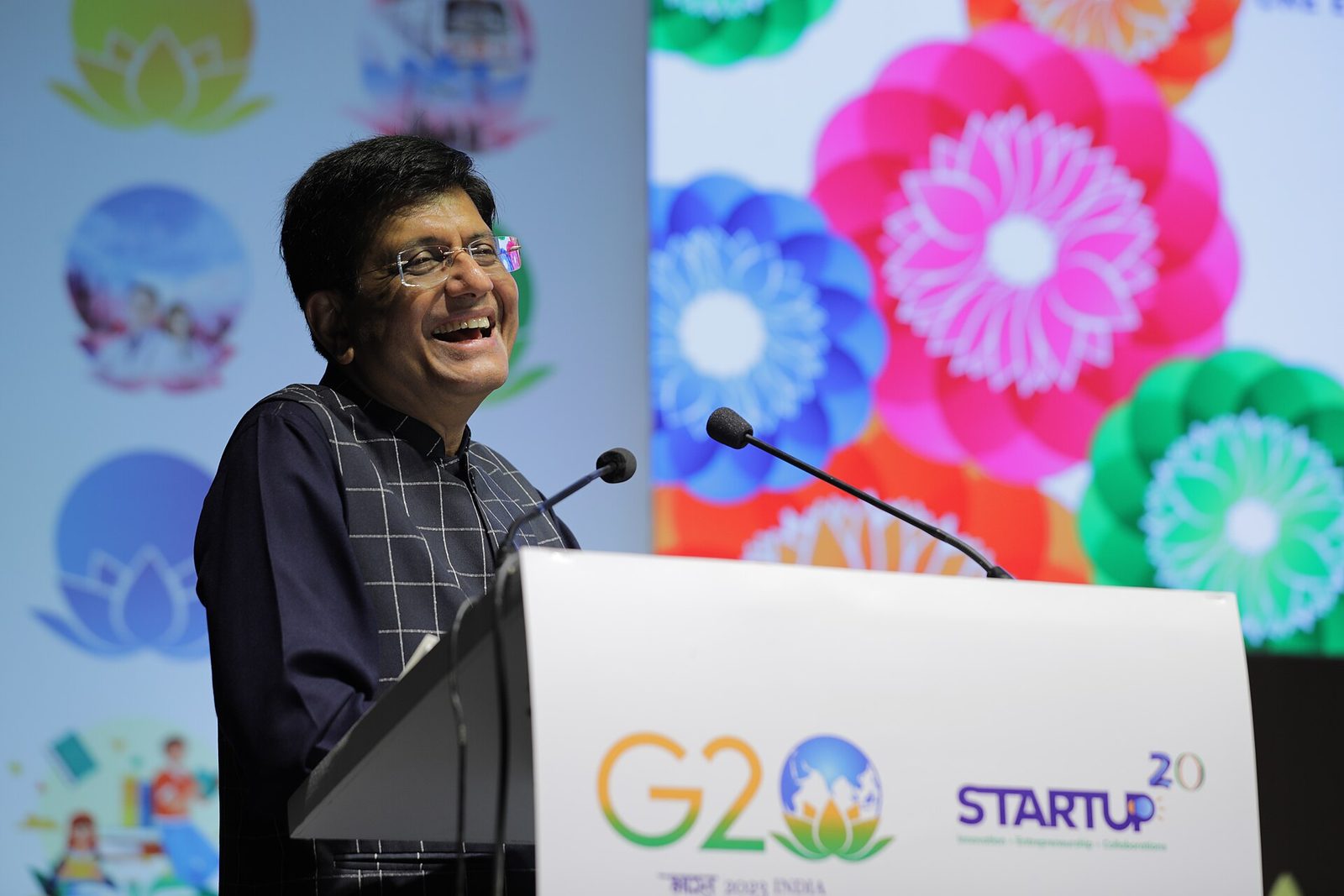
India's commerce minister has asked BRICS to build a shared trade platform that would let small and women-led businesses in one member country see what buyers in another actually want — and to turn the bloc's proposed Women's Advancement Fund into something that exists rather than something that is discussed.
Piyush Goyal made the case on Wednesday at the BRICS Women's Business Alliance Women-Led Development Conference in New Delhi, days before the leaders' summit. His argument rested on three obstacles he says stop smaller exporters from getting out of their home market: access to credit, access to buyers, and rules predictable enough to plan against.
The platform
The idea is not new to the grouping. Goyal pointed back to the BRICS commerce and industry ministers' meeting in Jaipur last month, where members agreed to explore a common platform for international trade.
What he described is specific. A business in one member country would be able to see product requirements in another market, and invoices raised between participants would be visible on the same system. Financial intermediaries could then take part, using that visibility to support women-owned and small enterprises as trade within the bloc grows.
That second half is the point. An invoice a lender can see is an invoice a lender can lend against, which is why Goyal asked governments, banks and export-import banks to take such invoices into account in credit decisions. He also urged the Women's Business Alliance and the BRICS Business Council to make sure that work already under way on an invoice-discounting platform reflects what women exporters actually need.
His framing of the underlying problem was blunter than the machinery suggests.
"Foreign trade should not be viewed only as a collateralized business," Goyal said, arguing that trade should open opportunities to entrepreneurs who would otherwise never reach an overseas buyer.
For a small exporter without property to pledge, that distinction decides whether a business can trade abroad at all.
The fund
On the Women's Advancement Fund, which was emphasised in the Jaipur Consensus, Goyal's position was that it should be taken up as a concrete initiative — language that acknowledges, without saying so, that it has not yet become one.
He asked member countries to raise the participation of women-owned enterprises in exhibitions, trade fairs, business forums and buyer-seller meetings, and proposed sector-specific women-led business delegations between members. A delegation devoted entirely to textiles was his example, aimed at integrating value chains and creating openings beyond BRICS markets.
Paperwork as trade policy
The least glamorous part of the speech was the part most likely to move volumes.
Goyal pressed members towards electronic trade documentation: e-invoices, electronic bills of lading and e-customs declarations. He also pointed to voluntary principles BRICS members have agreed on facilitating online delivery of services across borders while respecting national laws.
Trade documentation is where cross-border commerce actually slows down. A shipment held because a bill of lading is a physical document in transit costs a small exporter more, proportionally, than any tariff — and unlike a tariff, it is a problem member states can fix among themselves without negotiating market access.
The services gap
Goyal's sharpest observation was about what BRICS has been ignoring.
Services trade between member countries has not had the attention it deserves, he said, against a global services trade worth close to $10 trillion. He sees room for these economies to expand it, particularly in the digital economy, in mobility, and in areas where women entrepreneurs and micro, small and medium enterprises can realistically take part.
That is a reasonable claim about where growth is available. Manufacturing supply chains inside BRICS are shaped by geography and by a few very large players; services are less constrained by either.
On financial inclusion he drew on India's own record, citing nearly 300 million bank accounts opened for women.
What it adds up to
None of this is a headline deliverable of the kind summits are judged by. A common platform, an invoice-discounting facility, a fund that needs to be capitalised and a push for electronic paperwork are not the stuff of a leaders' declaration.
They are, however, the kind of thing an expanded BRICS can plausibly deliver. The grouping's more ambitious economic projects run into the same obstacle every time: eleven members with divergent interests, one of whom accounts for around 60% of the bloc's combined output. Trade plumbing is different. It does not require anyone to agree about geopolitics, and its benefits are distributed to whoever chooses to use it.
Whether the Jaipur agreement to explore a platform becomes a platform is the test. That answer will not come this weekend.