What India actually wants out of the BRICS summit
Local-currency settlement, payment connectivity, supply chains and biofuels — and explicitly not a BRICS currency. A modest list, chosen because it is achievable.
India goes into this weekend's BRICS summit chasing a narrow set of practical outcomes rather than a grand declaration: cheaper cross-border payments, more trade settled in local currencies, sturdier supply chains, energy security and a common line on artificial intelligence.
That list, described by government officials and by people who have done the job before, is deliberately modest. It is also the list a chair country writes when it knows the politics in the room are difficult and wants something to show for the year regardless of how the communiqué lands.
Payments, not a currency
The most watched item is the one India has been careful to define narrowly.
Officials expect movement on greater use of local currencies for cross-border settlement, on payment connectivity between members, and on cutting the cost of cross-border transactions. India has supported settling trade in national currencies as a way of raising trade flows.
What India has not endorsed is a BRICS currency, the project routinely presented abroad as a challenge to the dollar's dominance. The distinction is not cosmetic. Settling an Indian import from Russia in rupees and roubles reduces conversion costs and sanctions exposure; issuing a shared currency would require monetary union among eleven economies with nothing like the convergence that implies.
The gap between those two things is where most commentary about BRICS and the dollar goes wrong — and it is why the practical work sits inside the New Development Bank, where the dollar's share of project financing has fallen below 60%, rather than in any plan for a new banknote.
The supply-chain agenda
Beyond payments, officials describe a focus on building resilient and diversified global value chains and on supply-chain cooperation in strategically important sectors.
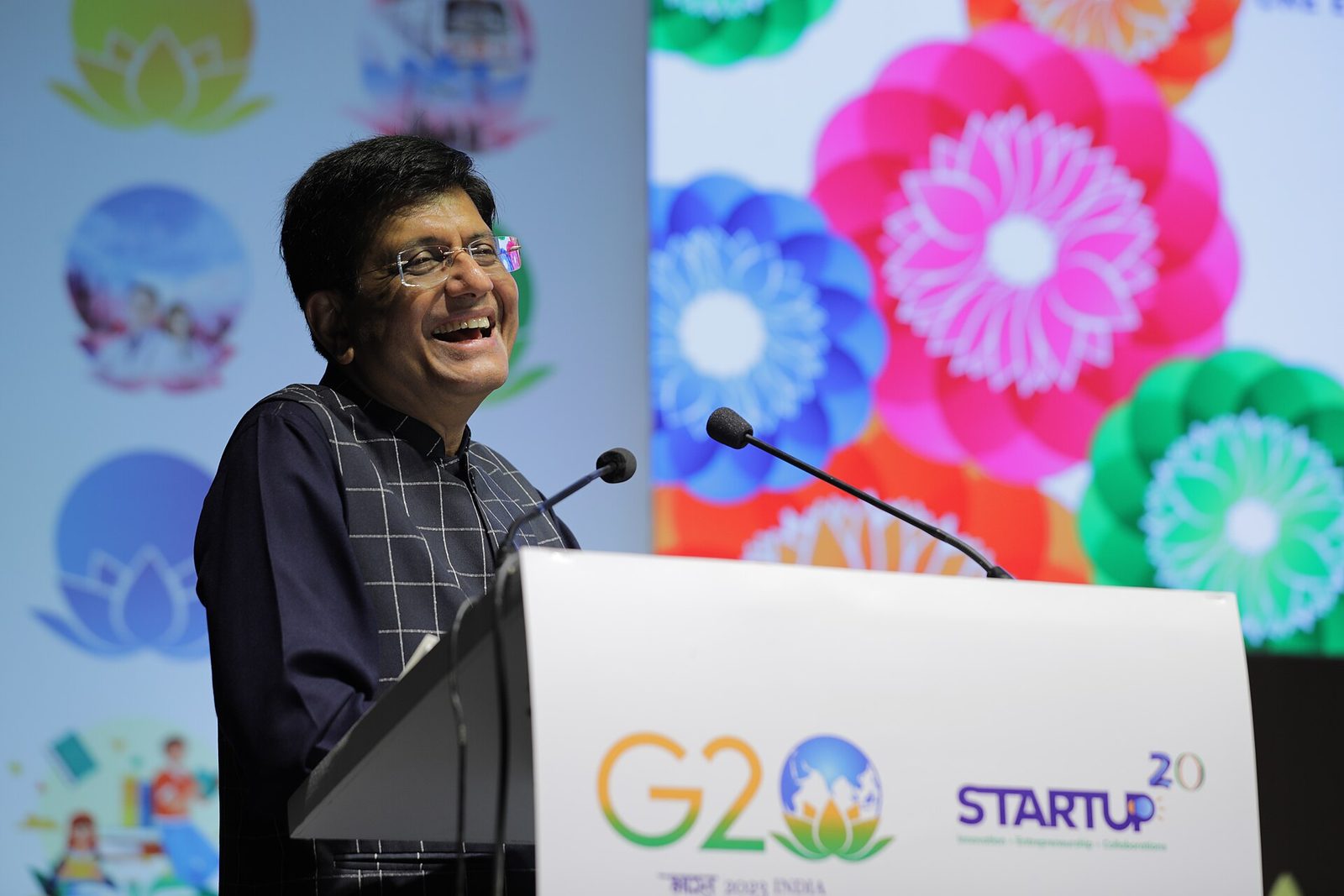
Support for micro, small and medium enterprises is expected to stay central, alongside digital trade and trade facilitation — cooperation on digitally delivered services, on customs, and on making cross-border commerce less obstructed. Commerce minister Piyush Goyal has already pressed the case publicly this week, calling for a common BRICS trade platform and for electronic trade documentation across members.
Energy security, access and equity are on the agenda too, together with innovation, resilient infrastructure and capacity-building.
Two specific pushes are expected from the host. Through the Global Biofuels Alliance, India intends to press for wider adoption of biofuels along with technology transfer and investment commitments — an argument sharpened considerably by the war in West Asia and the volatility it has brought to energy markets. Members are also expected to find common ground on newer technologies including green hydrogen and carbon capture, utilisation and storage.
What the sidelines are for
The summit's commercial value to India may lie outside the sessions.
The sidelines are seen in New Delhi as an opening on the questions that have accumulated with China over technology imports and investment restrictions. Those curbs have had measurable effects: technology-transfer restrictions imposed by Beijing recently forced the JSW Group to pause a 50 GWh lithium-ion cell factory.
The presence of both Xi Jinping and Vladimir Putin gives India room to reconsider its relationship with China, argue the Global South's case and manage Western expectations without unsettling Russia. Xi skipped the previous summit in Rio de Janeiro; Putin attended that one virtually. Both being physically in New Delhi is itself the change.
"Participation of leaders like Xi, Putin and others in the forthcoming summit in New Delhi is itself a sign of big success," said Dammu Ravi, India's former BRICS Sherpa and a former secretary for economic relations at the Ministry of External Affairs — more so, he added, "than concrete outcomes or deliverables".
That is an unusually frank account of how a host measures a summit, and it is worth taking at face value.
The balancing act
India is chairing a bloc that positions itself as an alternative to Western-led institutions while maintaining its own strategic and economic relationships with the United States and the Gulf states. Those two facts have to coexist for two days in the same building.
The immediate strain is West Asia. The expanded membership includes Iran alongside the UAE and Saudi Arabia, with sharply different positions on the war that began in February, and the bloc's Sherpas are still trying to find language all eleven will accept.
One government official said India could also use the summit to restate its message of humanity against the background of continuing wars in West Asia and Ukraine — the sort of framing available to a chair when specifics are contested.
The economic backdrop is not helping. Brent crude passed $100 a barrel this week with the Strait of Hormuz effectively closed, which for an oil-importing economy converts a diplomatic problem into an inflation problem.
Against that, a payments corridor, a trade platform and a biofuels commitment look small. They are also the things a summit can actually produce.