JSW and Volkswagen sign a non-binding MoU for an India joint venture
JSW believes it can cut material costs by as much as 50% and export to Europe under the new India-EU trade agreement. Volkswagen is weighing how much control it can give up.
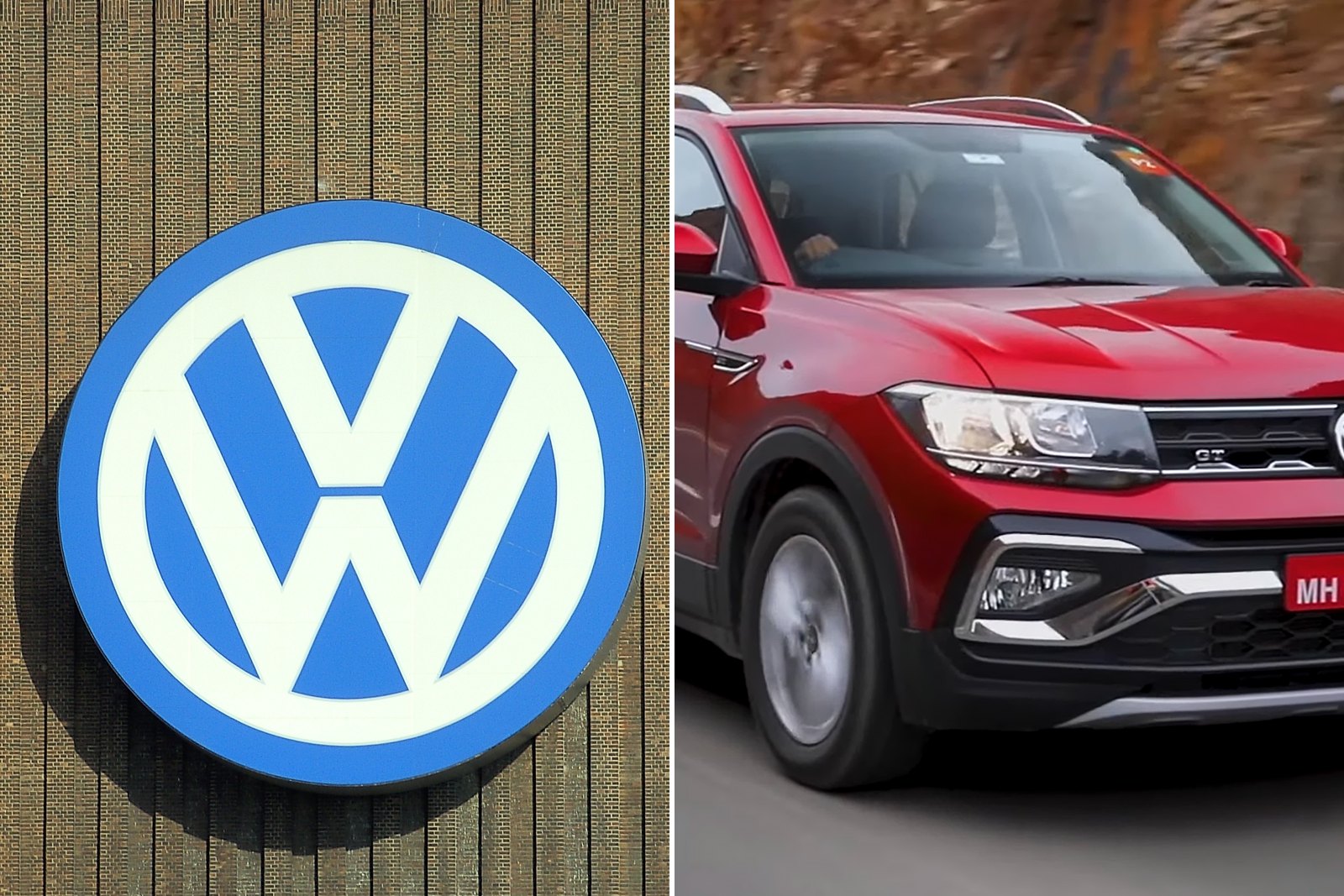
JSW Group and Volkswagen Group have signed a non-binding memorandum of understanding to explore a passenger-vehicle joint venture in India, an arrangement whose central purpose is to make cars in India cheaply enough to sell them in Europe.
The agreement was signed on Tuesday between JSW Green Mobility, the entity through which Sajjan Jindal's conglomerate is building its car business, and Škoda Auto a.s., the Czech company that runs Volkswagen Group's Indian operations. Formal negotiation over valuation and financial due diligence begins only now, with both sides aiming to close by December 2026.
The number at the centre of the talks
JSW has told Škoda that Volkswagen's production costs in India remain too high, and believes it can cut material expenses by as much as 50%. That figure is the reason the conversation is happening at all.
Volkswagen has been in India for more than two decades and has never converted brand recognition into volume. Its retail market share stood at 2.3% in the last financial year, according to the Federation of Automobile Dealers Associations, in a market led by Maruti Suzuki and Hyundai Motor India, with Tata Motors and Mahindra & Mahindra gaining quickly.
The group's Indian arm is not in difficulty. Škoda Auto Volkswagen India, which houses Volkswagen Cars, Škoda, Porsche, Lamborghini, Audi and Bentley, reported a 48% rise in net profit to ₹139 crore and an 11% increase in revenue to ₹22,338 crore in FY26, filings dated 24 July show. Škoda retail sales surged 68% over the year, helped by the Kylaq SUV. But profitability at that scale is not the same as a cost base that can supply Europe.
What each side is buying
"The main purpose of the deal from their (Volkswagen's) side is the cost," one executive familiar with the talks said, describing Volkswagen as needing a local partner to localise production and bring costs down.
For JSW, the attraction runs the other way: access to a global brand, engineering and operational know-how, and a route into Europe through the free trade agreement India signed with the European Union earlier this year.
"The joint venture can make the cars in India and export them to Europe," the same executive said. Lower Indian costs, on that logic, become a weapon against Chinese manufacturers on European forecourts — which is the competitive pressure both partners are actually responding to.
Discussions cover both of Volkswagen Group's Indian plants, at Chakan and Chhatrapati Sambhaji Nagar in Maharashtra. For now the partnership involves only the Volkswagen and Škoda brands, not Audi or the group's luxury marques, and the two sides would jointly appoint the chief executive and chief financial officer.
The China question
The tie-up would be the Jindal group's first automotive partnership without a Chinese firm, and that is not incidental.
JSW is preparing to enter the passenger vehicle segment through JSW Motors, which has a model-sourcing arrangement with the Chinese carmaker Chery. Its other venture, JSW MG Motor India, is a joint venture with the Chinese state-owned SAIC, in which JSW holds 35%. The group intends to run all three businesses — JSW MG Motor, JSW Motors and the proposed Volkswagen venture — as separate entities.
The regulatory climate makes that diversification valuable. Curbs on Chinese collaboration have tightened, and technology-transfer restrictions imposed by Beijing recently forced the group to pause a 50 GWh lithium-ion cell factory.
"This is one of the more strategically coherent JSW automotive bets. Unlike the Chery-linked JSW Motors venture, this one carries no China exposure," said Vinay Piparsania, founder of MillenStrat Advisory and Research, pointing to the investment-screening climate around Chinese capital in Indian manufacturing.
What is actually agreed
Very little, and both companies are careful to say so.
A JSW spokesperson said the proposed venture would develop, manufacture and sell passenger vehicles — internal combustion, electric, plug-in hybrid and hybrid — for domestic sale and export. But, the spokesperson added, "the MoU is exploratory and non-binding", with no definitive agreement yet and any firm arrangement subject to further negotiation, internal approvals and regulatory clearance.
Škoda Auto Volkswagen India described a two-party structure with joint control, defined roles and mechanisms intended to support quick decision-making — language that hints at where the difficulty lies. Volkswagen is weighing how much decision-making authority it can hand over in a venture selling cars under its own badges, and valuation is being discussed partly on what Volkswagen contributes: which models it supplies, and whether the venture's cars can be sold abroad.
Volkswagen has been here before. Talks with Tata Motors in 2017 and with Mahindra & Mahindra in 2024 both came to nothing. Momentum this time is said to have built after a meeting in London roughly two months ago between JSW executives led by Jindal and Škoda's senior management.
The prize is real. India offers labour, scale and now the European market access opened up by this year's India-EU free trade agreement, and Volkswagen needs a low-cost base as urgently as JSW needs a technology partner that is not Chinese. What neither side has yet resolved is who runs the thing — the question on which the last two attempts foundered.