BRICS at twenty: from four countries to eleven, and 29% of world GDP
The bloc has closed most of its gap with the G7 since 2009. Three-fifths of its output is China's, and its last ministerial meeting ended without a declaration.
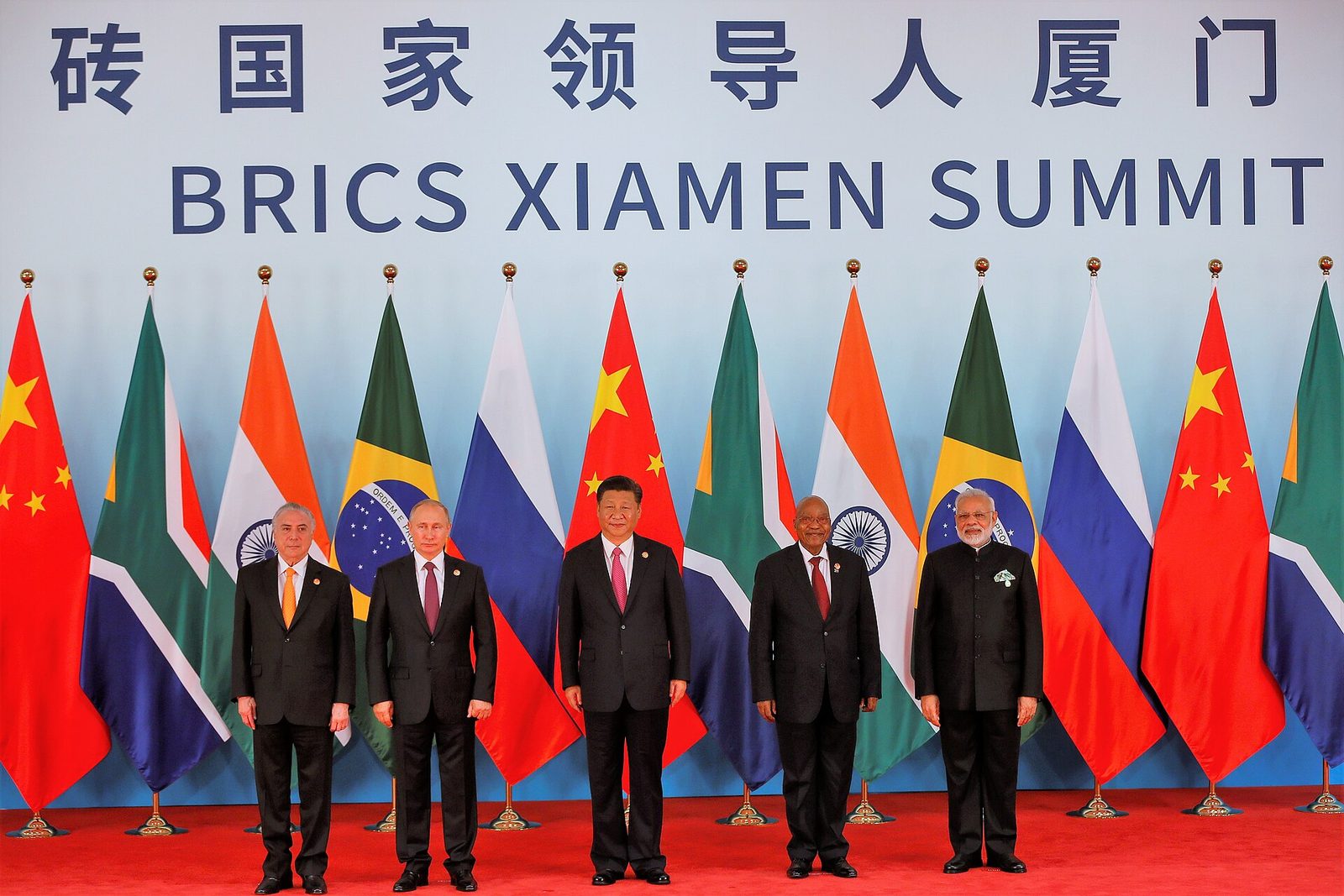
BRICS turns twenty this year, and the grouping that meets in New Delhi this weekend has more than doubled in size and gone from a little under a fifth of world output to close to a third of it. It has also become considerably harder to run.
The bloc now accounts for 29.1% of global GDP, up from 19.7% in 2009, the year it held its first summit. The gap with the G7 has narrowed from roughly 33 percentage points to about 15. That is the case for taking BRICS seriously. The case against is visible in the same room: the last ministerial meeting ended without a joint statement.
From an acronym to an institution
The name began as an argument in a research paper. The British economist Jim O'Neill coined BRIC in 2001 while chief economist at Goldman Sachs, in a paper titled Building Better Global Economic BRICs, which argued that the weight of those economies in world GDP would grow over the following decade and that global policy forums should be reorganised to reflect it.
"In line with these prospects, world policymaking forums should be reorganised, and in particular, the G7 should be adjusted to incorporate BRIC representatives," the paper said.
Twenty-five years later, the countries have built their own forum instead.
BRIC took institutional form in 2006, when the foreign ministers of Brazil, Russia, India and China met on the sidelines of the UN General Assembly in New York. The first leaders' summit followed in Yekaterinburg in 2009. South Africa joined in 2011, supplying the final letter.
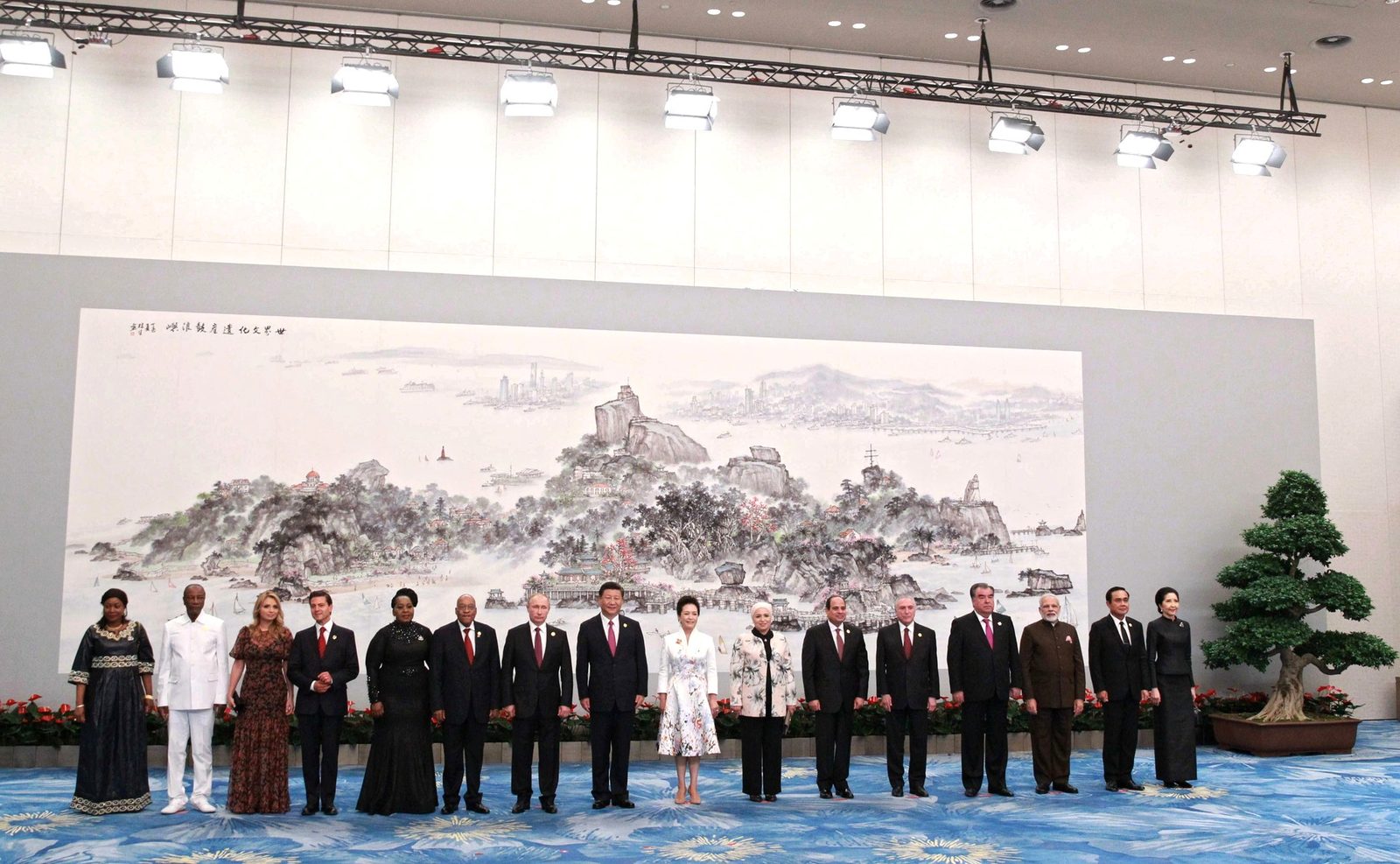
The formal expansion took effect on 1 January 2024, admitting Egypt, Ethiopia, Iran, Saudi Arabia and the UAE. Indonesia followed in January 2025, bringing the membership to eleven, with ten partner countries alongside.
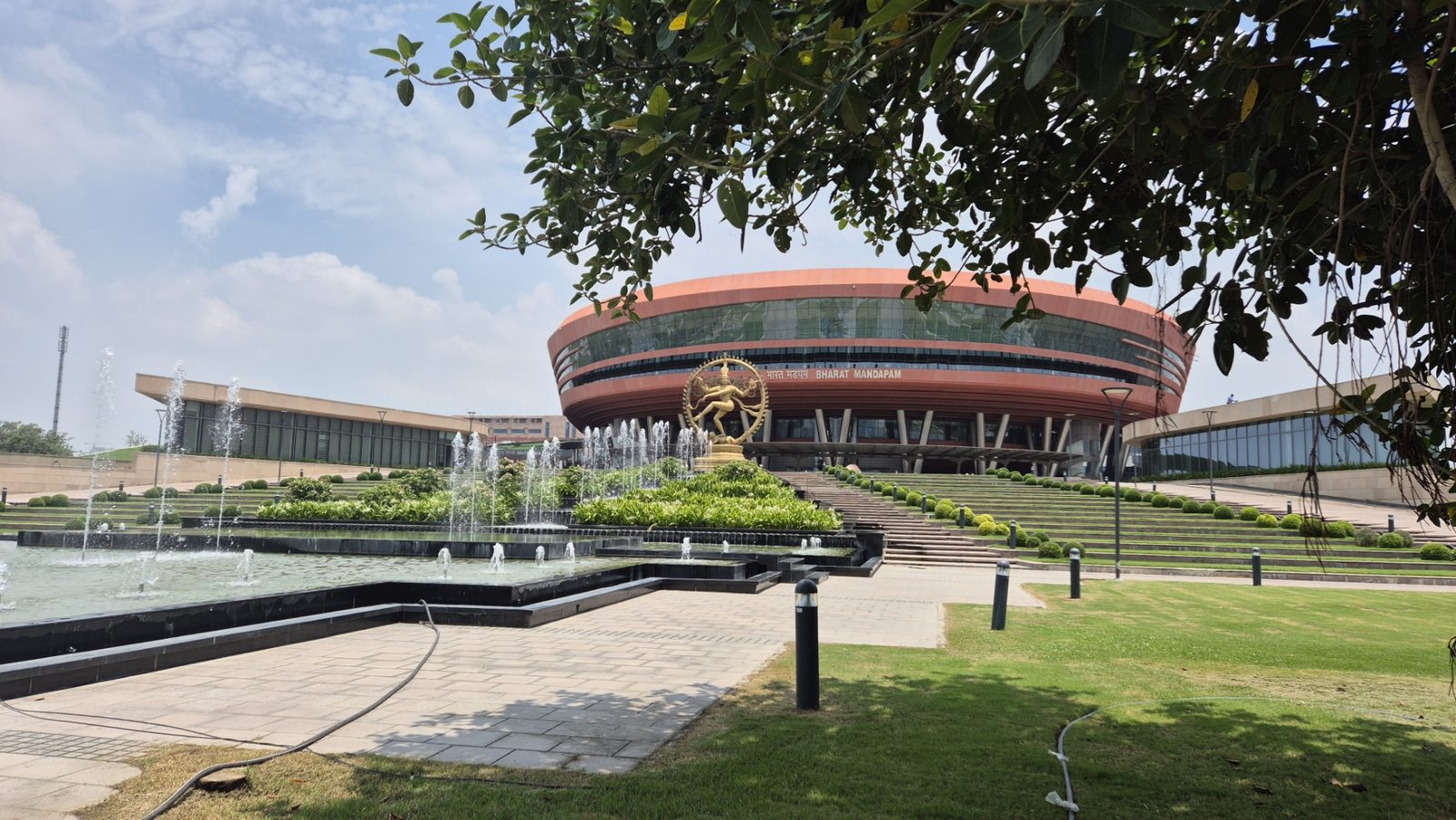
India is a founding member and is chairing the grouping for the fourth time, after 2012, 2016 and 2021. It assumed the current chairship on 1 January 2026.
The weight, and where it sits
| Share |
|---|
| BRICS share of global GDP, 2009 | 19.7% |
|---|
| BRICS share of global GDP, 2025 | 29.1% |
|---|
| China's share of the bloc's GDP | 60.4% |
|---|
| Gap to the G7, 2009 | ~33 points |
|---|
| Gap to the G7, now | ~15 points |
|---|
The concentration in that table is the thing to notice. China accounts for a little over three-fifths of the bloc's combined output, which means BRICS' economic weight is substantially China's economic weight with a broader membership around it. India and Russia supply the rest of the heft.
That has consequences for how the grouping is read abroad and how it functions internally. A bloc in which one member supplies three-fifths of the combined output cannot easily present itself as a coalition of equals.
The fault lines
The most visible split this year runs through West Asia. Iran, on one side, and the UAE and Saudi Arabia on the other, are members of the same bloc and parties to opposite sides of a war that began in February, in which Iran has launched attacks against both Gulf states.
The consequence was immediate. The BRICS foreign ministers' meeting in New Delhi produced no joint declaration; India issued only a chair's statement and an outcome document, which is the diplomatic record of a consensus that did not form.
Those frictions are not confined to this year or to the Gulf. India and China are economic competitors and geopolitical rivals as well as fellow members, a tension the expansion has not resolved and in some ways has sharpened.
The dollar question, in practice rather than rhetoric
BRICS has pushed to reduce its reliance on the US dollar, partly to insulate members from sanctions and currency volatility. The push has drawn a direct response: President Donald Trump threatened a 100% tariff last year if the bloc moved away from the dollar.
The reality is slower and more technical than either the ambition or the threat suggests. No BRICS currency has been agreed, and none is close. What has changed sits inside the New Development Bank, where the dollar's share of project financing has fallen below 60%, with the Chinese yuan the most common alternative and currencies such as the South African rand gaining ground.
The shift is also uneven, and it is mostly members financing projects in their own money rather than in each other's. More than 73.3% of the value of NDB-financed projects in China is denominated in yuan; 57% of the value in India is in rupees; the rand accounts for 29% of projects financed in South Africa.
That is de-dollarisation of a specific, limited kind — a development bank lending locally, not a currency bloc. It is also the part of the agenda most likely to produce something concrete in New Delhi, which tells you where the grouping's realistic ambitions currently lie.