Iran and the UAE agree a West Asia paragraph after months without one
Paragraph 28 of the New Delhi Declaration calls for maximum restraint and protection of civilians. In May, the BRICS foreign ministers could not agree any wording at all.
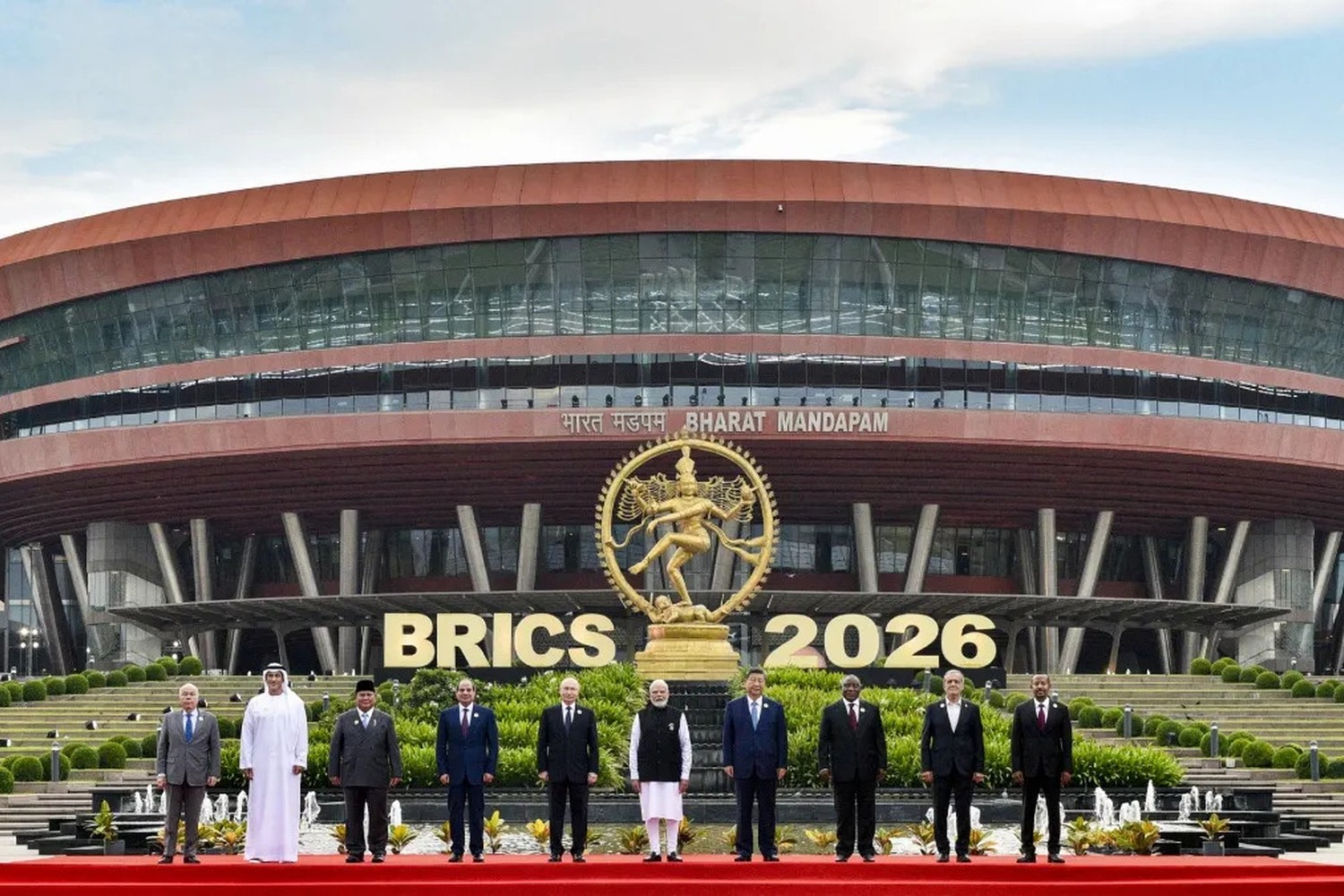
India secured agreement between the United Arab Emirates and Iran on the West Asia paragraph of the BRICS declaration on Saturday, after negotiations that ran into the closing days of the summit.
Four months ago the same two members could not agree any wording at all. At the BRICS foreign ministers' meeting in May there was no consensus on the paragraph, and Delhi issued a chair statement instead.
What paragraph 28 says
The agreed text records concern and calls for restraint without assigning responsibility.
"We express deep concern over the continued escalation of tensions in Middle East/West Asia," the leaders said, and, recalling their respective national positions, called for "exercising maximum restraint, as well as avoiding actions that could further aggravate the situation".
It goes on to address civilians and sovereignty together: the leaders urge protection of "civilians and civilian infrastructure in accordance with the purposes and principles of the Charter of the United Nations", including "respect for the sovereignty and territorial integrity of the States".
The declaration encourages greater efforts through dialogue and diplomacy towards a long-term understanding, and stresses the need to maintain the smooth flow of global trade, supply chains and energy in accordance with applicable international law.
Why those words and not others
Each element answers a position held by one of the two members.
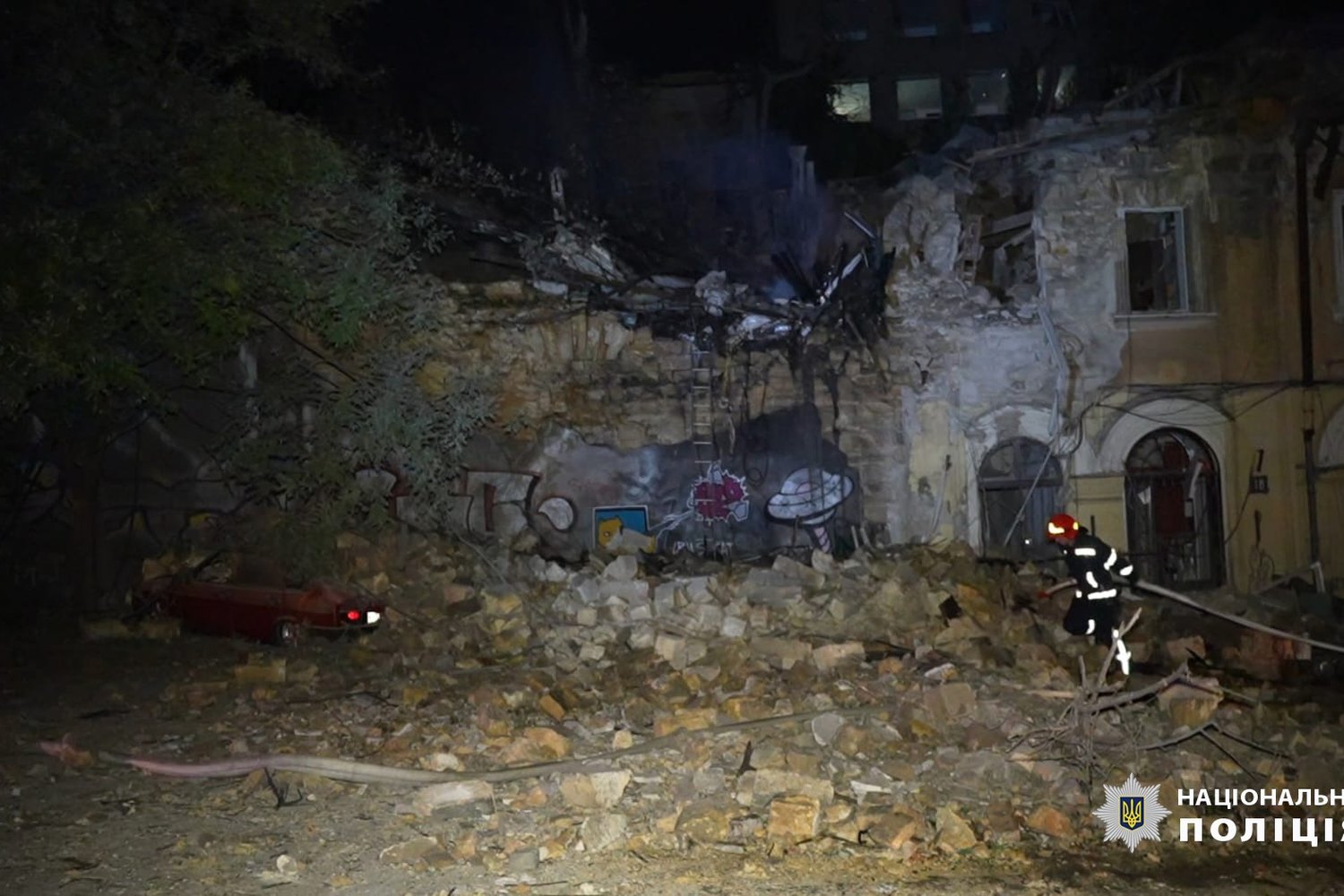
The UAE has been on the receiving end of a series of Iranian strikes on its cities, with Tehran describing it as a proxy of the United States. The references to sovereignty, territorial integrity and the protection of civilian infrastructure speak to that.
The call for maximum restraint and for dialogue speaks to Iran's position, as does the absence of any attribution of blame.
The energy clause matters to every member. The conflict has disrupted shipping through the Strait of Hormuz and pushed oil above $100 a barrel.
What changed since May
In May, Delhi's chair statement acknowledged "differing views among some members" over the situation in West Asia, and noted that members had set out their "respective national positions".
That is diplomatic language for failure to agree. The New Delhi Declaration replaces it with a substantially more expansive paragraph that all eleven members signed.
Both the UAE and Iran joined BRICS in 2024, which means this is the first full summit cycle in which the grouping has had to reconcile the two.
The meeting on the margins
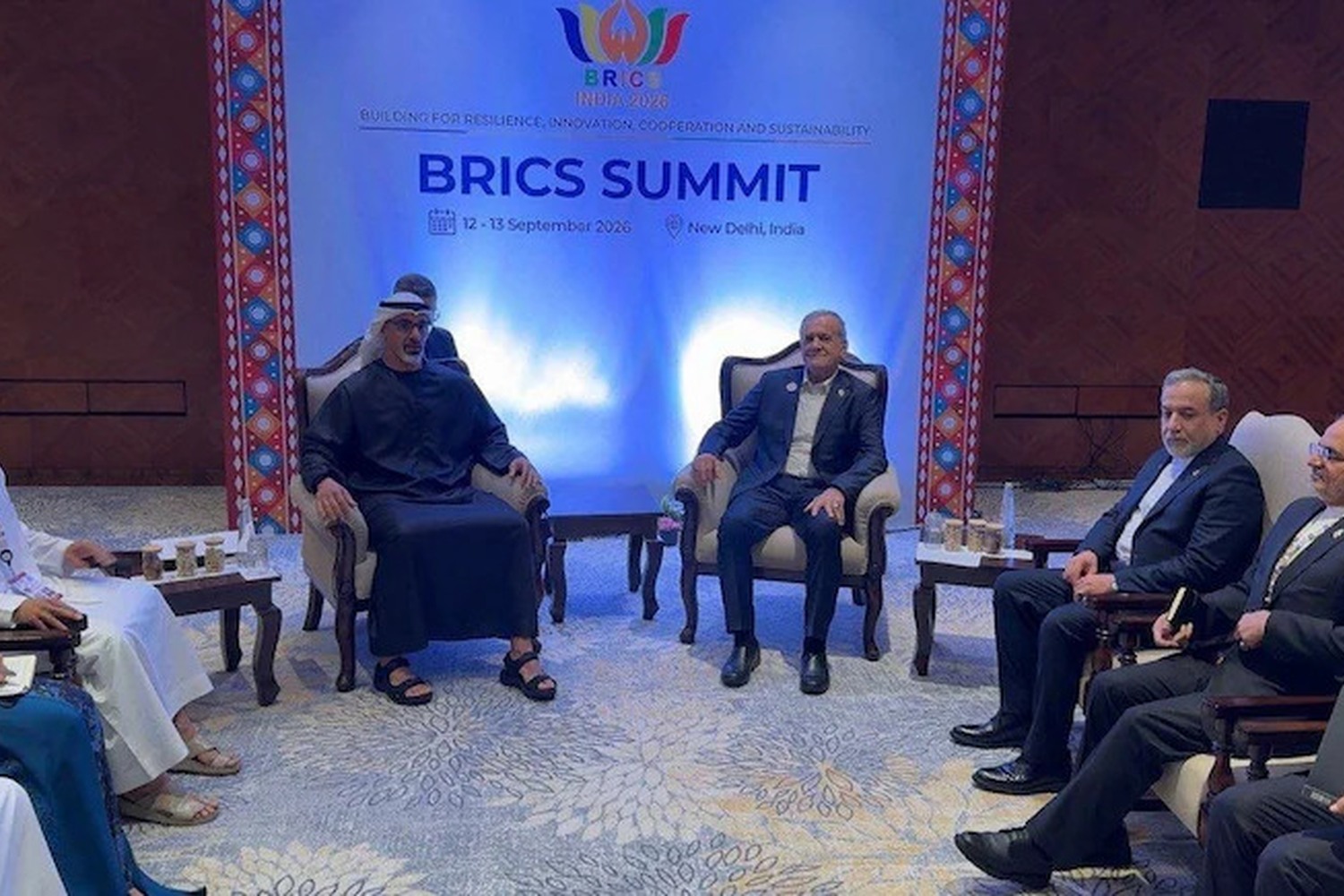
Against that background, the Crown Prince of Abu Dhabi, Sheikh Khaled bin Mohamed bin Zayed Al Nahyan, met Iranian President Masoud Pezeshkian on the margins of the summit.
A meeting between the two on the sidelines of a summit hosted by a third country is the kind of contact that consensus language both requires and enables.
How it was done
Indian officials worked to bridge the gap between the two sides. The BRICS Sherpas — the most senior negotiators from the eleven member countries — worked through the final days to settle the joint declaration as the war flared with an exchange of strikes between the United States and Iran.
Sudhakar Dalela, Secretary (economic relations) in the Ministry of External Affairs and India's BRICS Sherpa, called the adoption of the declaration one of the defining outcomes of India's chairship. It demonstrated, he said, "that BRICS members can forge consensus on matters of global importance".
A familiar shape
The Indian Express notes the precedent: at the G20 summit in New Delhi in September 2023, the paragraph on the Russia-Ukraine war was agreed by consensus after a protracted negotiation.
The method is the same in both cases. Where members cannot agree on cause or blame, the text describes the consequences everyone accepts — civilians, sovereignty, energy flows — and leaves the disputed question out.
It produces a document that is signed rather than a document that settles anything, which is the trade a consensus grouping makes.