Oil passes $100 a barrel as US-Iran strikes widen
Brent reached $100.70 on Wednesday, its highest since late July, after strikes on tankers in the Gulf and on Saudi oil facilities. Tehran says a new prohibited shipping zone will reach into the Arabian Sea.
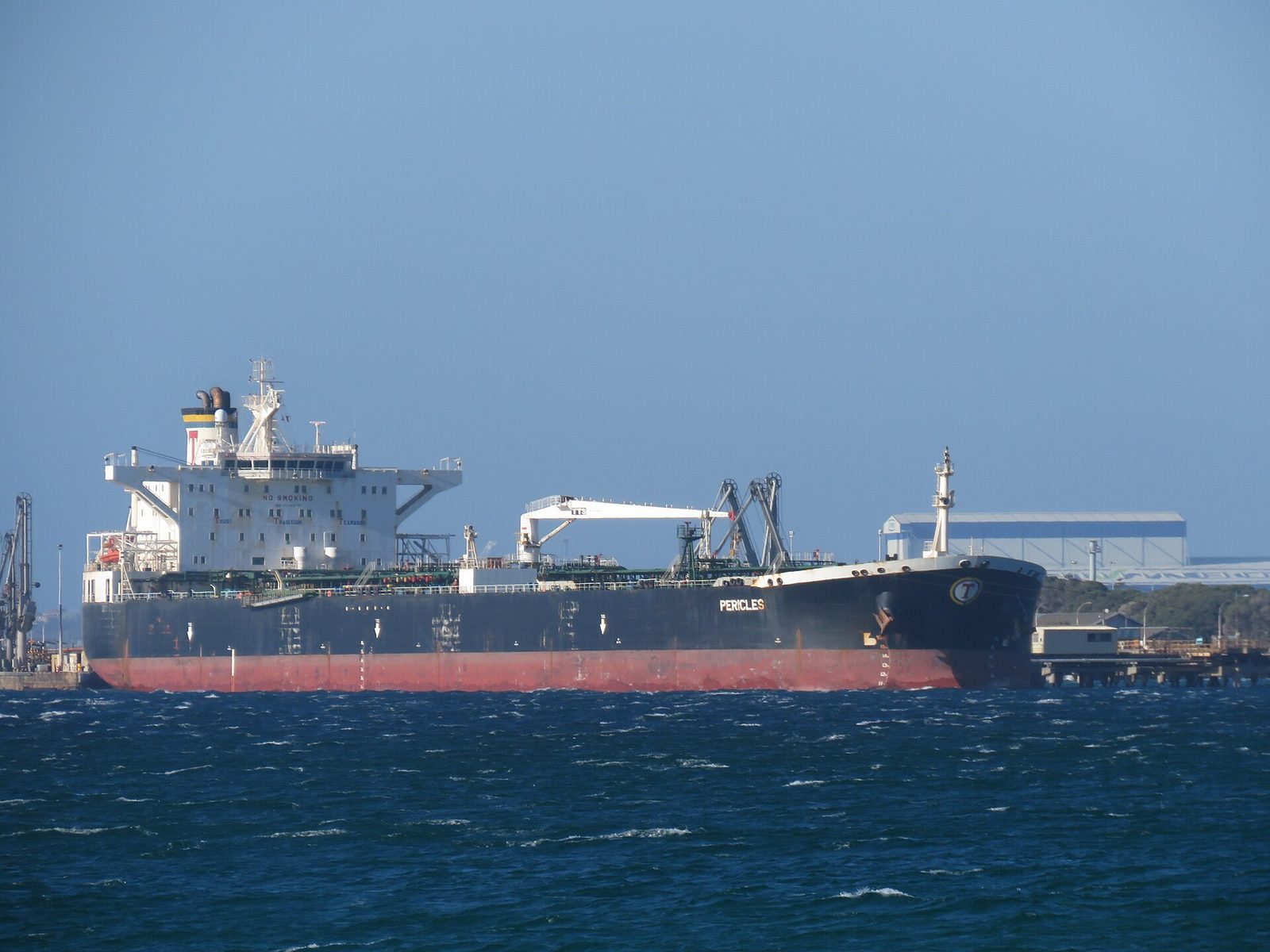
Brent crude passed $100 a barrel on Wednesday for the first time since late July, after American and Iranian forces attacked tankers across the Gulf and Yemen's Houthis struck oil installations inside Saudi Arabia. A barrel of the global benchmark was priced at $100.70 in the afternoon, up 2.83% on Tuesday.
For anyone paying for fuel, that number is the story. Before the war between Iran and the United States and Israel began in February, Brent traded at about $70. The seven months since have taken roughly $30 out of the world's cheapest energy assumption, and the increases have already reached forecourts from North America to South Asia.
What happened overnight
The United States said it had struck five Iranian tankers in retaliation for Iranian attacks on an American warship. US Central Command said four vessels linked to Iran's Islamic Revolution Guard Corps — Kaviz, Charminar, Horizon 1 and Riesco — were destroyed in the Gulf of Oman, and a fifth, Derya, near Kharg Island, which hosts Iran's main oil export terminal. Crews were directed to abandon ship before the vessels were hit.
Iran's Revolutionary Guards said they had answered with attacks on eight tankers and two warships, and on an American base in Jordan. Jordan's armed forces said they intercepted 20 Iranian missiles aimed at Muwaffaq Salti Air Base, with two others falling in unpopulated areas and no casualties. Centcom said the Iranian claim to have hit two of its warships was false.
The commercial consequences arrived immediately. The UK Maritime Trade Operations agency said it had reports of merchant vessels in the northern Gulf and the Gulf of Oman coming under disabling fire. One ship 24 nautical miles north-west of Port Rashid in the United Arab Emirates was seen listing at anchor. Iraqi authorities put out a fire on a Panama-flagged tanker, New Andros, carrying two million barrels of fuel oil when a drone hit it in the Gulf.
The zone that matters more than the strikes
The single most consequential announcement of the day was not a missile. An IRGC spokesman, Hossein Mohebi, told Iranian state television that Iran would soon publish co-ordinates for a new prohibited zone for shipping, covering part of the Sea of Oman and part of the Arabian Sea along the approach route to the Strait of Hormuz.
"If a vessel enters that area without co-ordination, it will be subject to our sanctions," he said.
That extends the risk envelope well past the strait itself. Roughly a fifth of the world's oil and liquefied natural gas shipments normally pass through Hormuz, and the waterway has been effectively closed since Iranian missile and drone attacks on commercial shipping met an American naval blockade of Iranian ports. Pushing the exclusion outward turns a chokepoint problem into a sea-lane problem, and shipowners price sea lanes through their insurers.
The pressure is not confined to the Gulf. The Houthis, who control much of north-western Yemen, have been hitting Saudi energy infrastructure and tankers in the Red Sea since July, when a four-year ceasefire in Yemen began to come apart. Drone and missile attacks caused fires at several Saudi oil facilities this week, and the Houthis reported dozens of Saudi strikes in Yemen in reply.
Markets did the arithmetic
By Thursday the move had run further. West Texas Intermediate futures for October delivery climbed above $100, and Brent for November delivery went above $105. American equities fell: the Dow Jones Industrial Average lost 195 points, or 0.4%, the S&P 500 dropped 0.6% and the Nasdaq Composite slid 0.9%. Chipmakers that had led the bull market gave ground, with Intel down 3% and Micron Technology down 2%.
The transmission runs through bonds. The oil move pushed the yield on the 10-year Treasury above 4.9%, its highest since November 2023, because expensive energy raises the inflation an investor must be compensated for. Higher yields then feed into mortgages, car loans and corporate borrowing, which is how a tanker burning off Kharg Island ends up in a household budget.
Wednesday's producer price index gave no relief. Wholesale prices rose a seasonally adjusted 0.4% in August, in line with expectations, but the annual rate of 5.4% sits far above the Federal Reserve's 2% target. Traders in fed funds futures were pricing a 74% chance of a quarter-point rate rise when the Fed's meeting concludes on 16 September.
"The PPI release itself was inconclusive," wrote Stephen Coltman, head of macro at 21shares, adding that oil back above $100 and yields at new highs were "raising the stakes for investors ahead of tomorrow's crucial CPI report".
What would have to change
Nothing in the day's exchanges suggested either side is looking for an exit. Asked about the tit-for-tat strikes, the US Secretary of State, Marco Rubio, said the position was "pretty straightforward" and that "Iran continues to try to hit US naval ships", with tankers lost each time it does.
Prices at this level are not a supply shortage in the ordinary sense. The oil exists; the difficulty is moving it past a navy and a shifting exclusion zone. That is why the market is reacting to announcements as sharply as to damage. Until the route through Hormuz is treated as safe by the people who underwrite the ships, $100 is a floor argument rather than a ceiling.