IAEA board refers Iran to the UN Security Council for the first time in 20 years
Twenty-three of the watchdog's 35 governors backed the referral and Russia, China and Niger opposed it. Inspectors have not been inside Iran's bombed nuclear sites since the strikes.
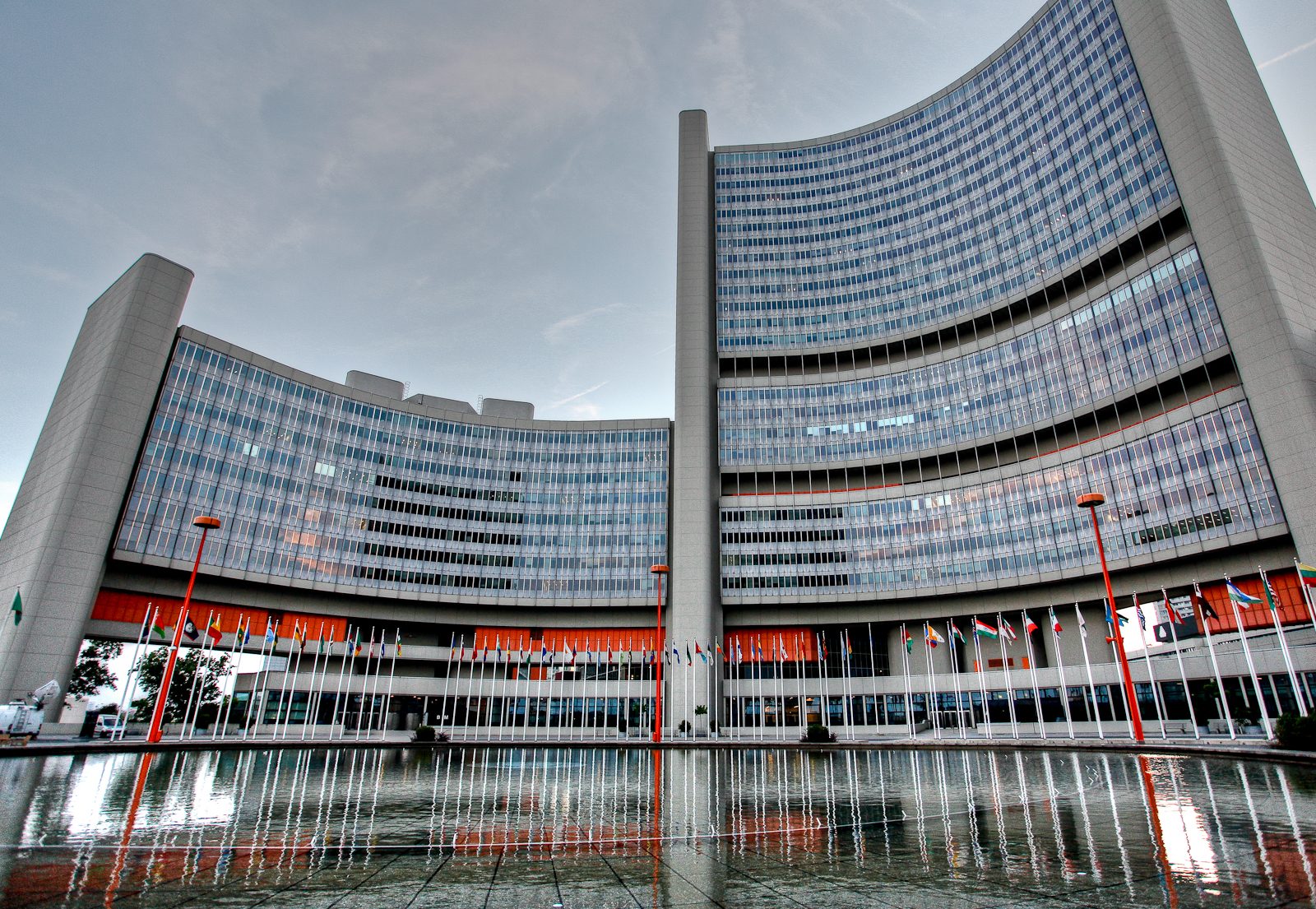
The board of governors of the International Atomic Energy Agency voted on Wednesday to report Iran to the United Nations Security Council for breaching its non-proliferation obligations, the first time the 35-nation board has taken that step in two decades. Diplomats at the closed-door meeting in Vienna said the resolution passed with 23 votes in favour and three against, with eight abstentions. Russia, China and Niger voted no.
The referral is unlikely to produce action in New York, because Russia and China hold permanent seats and vetoes on the Security Council. Its significance is what sits behind it: since the American and Israeli strikes on Iran's nuclear installations, agency inspectors have not been allowed back into the sites they used to monitor, and Tehran has not accounted for a stockpile of enriched uranium the agency cannot currently see.
The resolution was proposed by the United States, Britain, France and Germany. Its text recorded grave concern at what it called Iran's "continued non-compliance with its obligations", and repeated the board's call for Tehran to remedy that urgently. It also instructed the agency's director general to pass the resolution, and previous ones, to every IAEA member as well as to the Security Council and the General Assembly.
What inspectors can no longer see
Rafael Grossi, who heads the agency, had told the same board on Monday that the access problem could not wait. The lack of information about the bombed facilities and the inability to verify what is inside them was, he said, "a matter of serious proliferation concern". He added that the situation "needs to be rectified with the utmost urgency".
How much nuclear material is at stake is not settled. Before the attacks the IAEA put Iran's holding of uranium enriched to up to 60 per cent at 440.9kg, and it believes more than 200kg of that remains at a single site. Sixty per cent is a short technical step from the roughly 90 per cent regarded as weapons grade, and by the agency's own yardstick the larger figure would be enough, if enriched further, for about ten weapons.
Iran is a signatory to the Nuclear Non-Proliferation Treaty, which forbids it from building nuclear weapons, and has said repeatedly that it is not doing so.
Tehran calls the vote political
Iran's mission to the IAEA rejected the resolution in a post on X, complaining that it had been adopted by a vote rather than by consensus. "The current situation is created solely because of the criminal acts of aggression by the U.S. and Israeli regime", the mission said. It added that Washington's aim of forcing Iran to surrender "and to plunder its oil will never happen". Tehran had warned on Monday that it would retaliate if the resolution passed, though its first response did not repeat the threat.
The European Union said Iran had suspended cooperation with the agency and was refusing to let it inspect nuclear facilities. It called on Tehran to provide "updated verifiable declarations about the quantity and whereabouts of nuclear material" and to let inspections resume everywhere.
Moscow and Beijing call it unlawful
China and Russia lined up with Iran before the vote, arguing that a referral "lacks a legal basis" and would deepen the crisis rather than help diplomacy. The three governments called the original non-compliance finding "politically motivated and far-fetched", and pressed the argument Tehran has made throughout: that the American and Israeli strikes are themselves the reason inspectors are no longer admitted.
Iran's mission to international organisations in Vienna went further, saying the resolution would bring about the "further erosion and ultimate collapse of the proliferation regime as a whole" - a sharpening of Tehran's line that the agency is driven by politics rather than verification.
Pressure from several directions at once
The referral lands while Iran is fighting a war with the United States and absorbing steadily widening sanctions. UN measures were reimposed last year through the snapback mechanism triggered by Britain, France and Germany. Britain added tougher restrictions this week on Iranian access to its financial system, trade and shipping.
Separately, researchers at the Center for Strategic and International Studies published an analysis of six years of satellite imagery of Kuh-e Kolang Gaz La, the underground complex known as Pickaxe Mountain, about two kilometres south of Natanz and roughly 225km from Tehran. They recorded more road activity in 2026 than at any earlier point, and what they described as a "clear surge in construction activity": tunnel entrances raised and hardened, internal roads paved, access areas reinforced and excavated soil carted away, in imagery from July and August. The pattern suggested work had moved from digging to building inside the complex. CSIS set out three possibilities for the site - centrifuge assembly, uranium enrichment, or protected space for other nuclear work - without concluding which.
Why it took a second resolution
The board had already found Iran in non-compliance on 12 June last year, the day before Israel began bombing Iranian nuclear facilities, with the United States joining soon after. Reporting that finding onward to the Security Council required this separate vote. The original case concerns Iran's failure to explain uranium traces found at undeclared sites, which the agency investigated for years. The dispute over access to the bombed sites is a newer problem layered on top of it.
Wednesday's text also referred back to a resolution passed in June this year, which told Iran to declare its remaining enriched uranium and allow inspectors to verify it.
What the Security Council does with the referral is the open question. Sending the file back revives a track dormant for twenty years, but with two permanent members opposed, the ceiling on any action is low. The agency's underlying problem is unchanged either way: by its own account it has lost track of the 440.9kg stockpile, and no vote in Vienna or New York puts an inspector back inside a bombed enrichment hall.
Sources
- Al Jazeera — Vote, EU statement, Grossi quote, Iranian mission response
- Reuters (via Al-Monitor) — Vote breakdown from diplomats, resolution text, uranium figures
- Iran International — Russia and China objections, snapback context, CSIS Pickaxe Mountain analysis