Britain bans imports from Israeli settlements in the occupied West Bank
Foreign Secretary Ed Miliband told MPs the government accepts that settler violence amounts to ethnic cleansing. Israel banned 12 British MPs in reply.
Britain has banned the import of all goods produced in Israeli settlements in the occupied West Bank, the most significant shift in its policy towards Israel since it recognised Palestinian statehood last year. Announcing it to Parliament on Tuesday, Foreign Secretary Ed Miliband said the government accepts that settler violence in parts of the West Bank amounts to "ethnic cleansing", and confirmed as official policy that the settlements are unlawful.
Israel responded within hours with four counter-measures, among them barring 12 British MPs from entering the country and closing the British consulate in Jerusalem.
The package goes beyond the import ban. Anyone supplying the settlements with construction work, infrastructure, finance or property services can now be sanctioned, whether a company, an organisation or an individual, as can settlers who have backed or encouraged violence against Palestinians. Advertising in Britain for the sale of property in West Bank settlements is banned outright. Export licences for weapons and other goods judged to sustain the occupation will no longer be granted, and Miliband said that will hold for as long as the occupation does. Israeli goods and services are untouched.
What Miliband told MPs
Miliband framed the measures as a "comprehensive reset" of British policy — an approach, he said, that "not only calls out the injustice" but acts on it. He was careful about the target: "The sanctions regime will target illegal settlements and settlement expansion, not Israel."
He said he did not believe "the British people want us supporting the occupation by accepting products from settlements in our shops", and accused the Israeli government of turning a blind eye to violence and intimidation against Palestinians, describing those carrying it out as "settler terrorists".
He also announced an extension of the existing global human rights regime to allow faster action against settlement expansion, singling out E1 — a proposed settlement that would cut the West Bank in two and, in his words, end hopes of a two-state solution.
Miliband, who is Jewish, said the measures are aimed at the Israeli government rather than the Israeli people, and promised a tougher approach to rising antisemitism in Britain. Targeting Jewish people in the UK over the actions of Israel's government was, he said, "anti-Semitism, pure and simple". Not everything in the statement pointed one way: he announced new sanctions on Al-Qard al-Hasan, the financing arm of the Lebanese group Hezbollah, and said Britain would reimpose sanctions on Iran in line with the EU and the United States.
How much trade is involved
The sums are modest against the wider relationship. UK-Israel trade totalled £6bn in 2025 according to House of Commons figures, while goods imported from the occupied territory came to an estimated £38m. Britain's main imports from Israel include precious stones and metals, technical and medical equipment, plastics, machinery and fresh produce; its exports include defence equipment such as drones, helicopters and aircraft components.
The distinction between Israeli and settlement goods is not new. Settlement products do not receive preferential tariffs, and importers claiming those tariffs must show British customs that goods were not made in territory brought under Israeli administration since June 1967. Labelling guidelines exist, though there have been persistent concerns that settlement produce is mislabelled as Israeli.
Britain suspended about 30 arms export licences in 2024 over Israel's conduct in Gaza, with an exemption for F-35 components that Israel can obtain through other partners.
In the Jordan Valley, a shrug
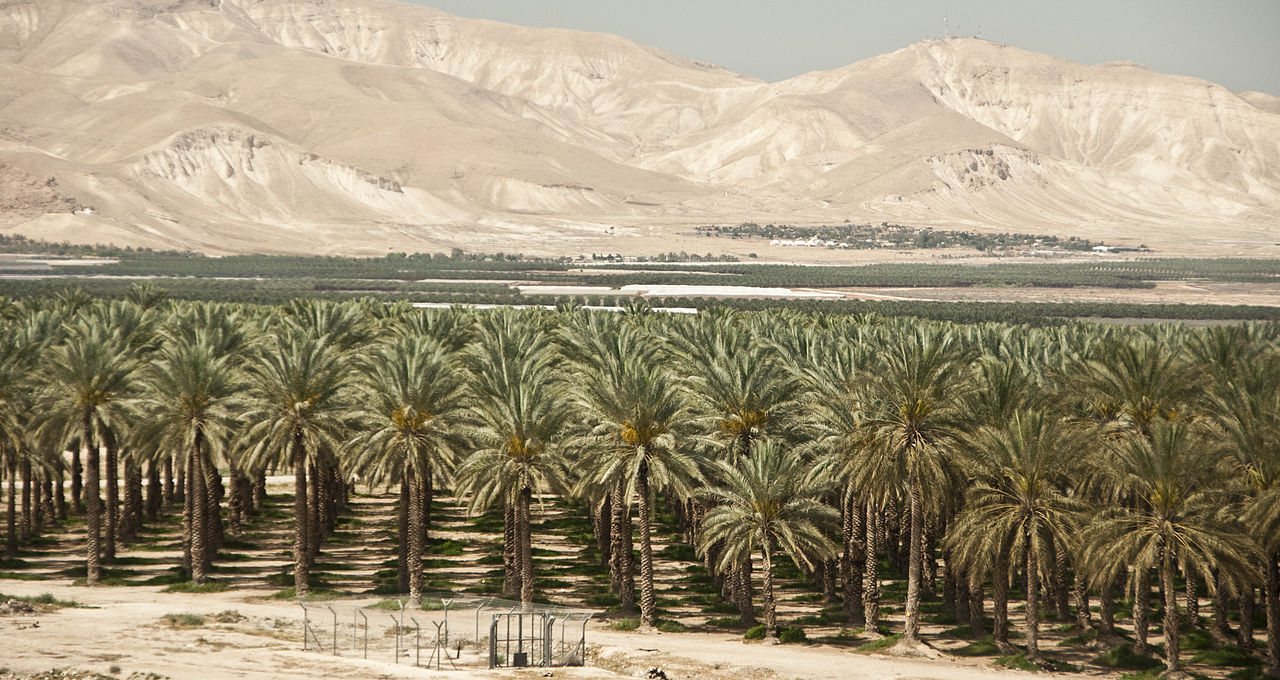
In the settlements themselves the response was closer to irritation than alarm. Reporting from Israeli settler farms in the Jordan Valley, where the date harvest was ripening, the BBC's Yolande Knell found growers preparing for the ban rather than fearing it. Avigdor Arbel, a date farmer from the settlement of Mesua, called such boycotts "really disgusting". He sells mostly into Europe, but also to the United States and now India, and was unbothered by the prospect of losing British buyers. "As soon as we have a situation of pressure and boycotts, we always break out and look for other markets", he said.
Settlements have expanded quickly under the current Israeli government, whose ministers have said openly that they want to bury the idea of an independent Palestinian state. Settler violence against Palestinians has climbed to what the UN calls an all-time high.
Israeli voices in favour
Not all the Israeli reaction was hostile. A group including the president of the Israel Academy of Sciences and Humanities, a former prime minister, a former army chief and several ex-ministers and diplomats called the British move an inevitable consequence of the Israeli government's own failures. "Sanctions [are being imposed] against Jewish terrorists, and not against the legitimacy of the state of Israel", they wrote in a joint statement, adding that there was no basis for the government's claim that the sanctions were an expression of antisemitism.
Writing in Haaretz, Esther Solomon argued that Israel's government had broken the oldest convention in diplomacy - obfuscation and expressions of concern in place of action.
Israel's foreign minister called the British decision hostile. Among the counter-measures was the closure of the British consulate in East Jerusalem.
Twelve countries move together
After the speech, 12 countries issued a joint statement backing a two-state solution and signalling their own trade restrictions on settlements: France, the UK, Canada, Denmark, Spain, Finland, Ireland, Iceland, Norway, Poland, Portugal and Sweden. They called on Israel to halt settlement expansion immediately.
Sources
- Al Jazeera — Full measures, Miliband quotes, trade figures, joint statement
- BBC News — West Bank reaction to the sanctions
- The Guardian — Israeli reaction