Hong Kong court convicts Wall Street Journal publisher over reporter's union role
Dow Jones was found guilty of deterring Selina Cheng from chairing the city's journalists' union, and acquitted of sacking her for it. Sentencing comes later.
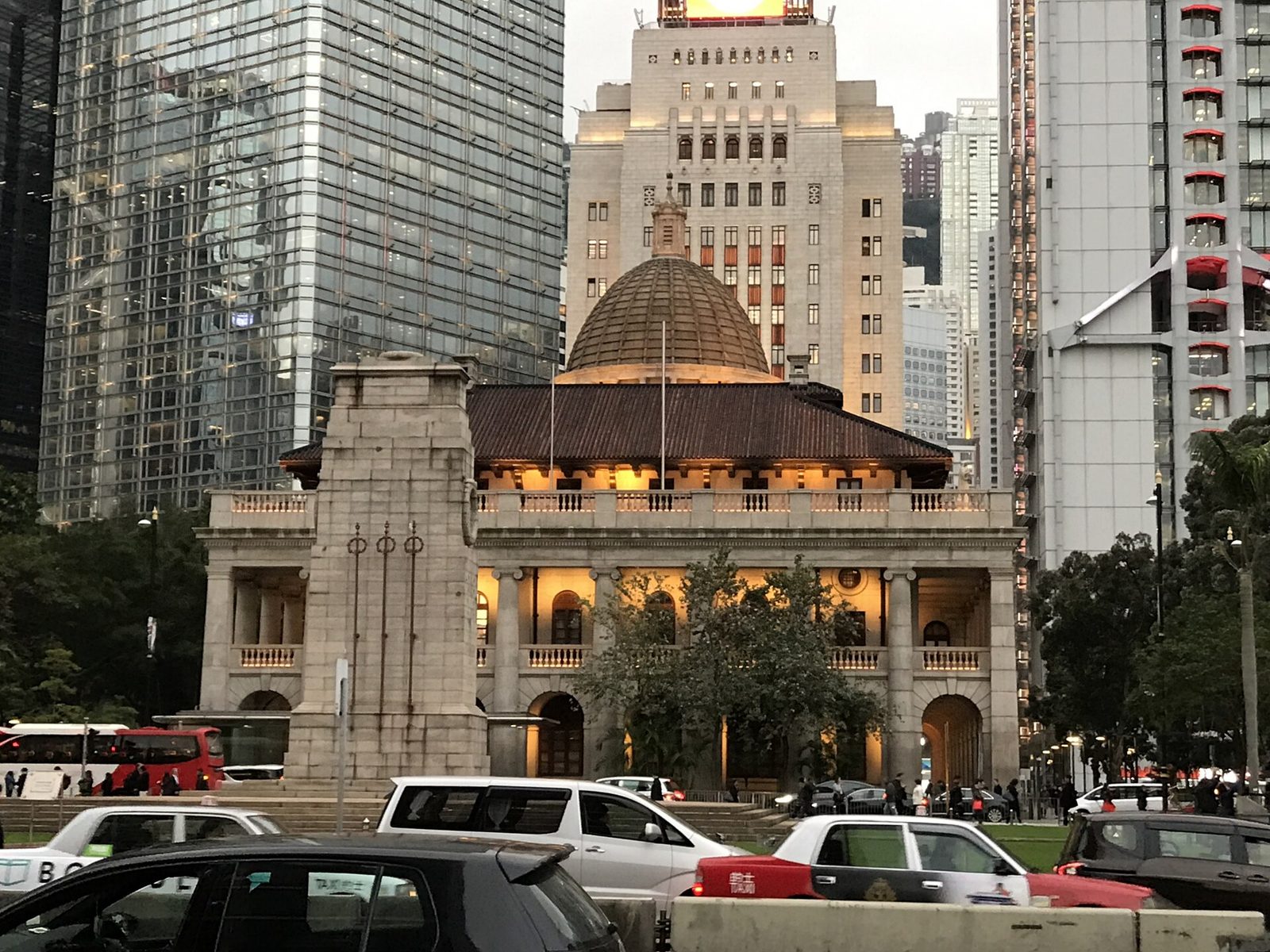
A Hong Kong court convicted Dow Jones Publishing, which publishes the Wall Street Journal, on Thursday of having discouraged one of its reporters from serving as a union officer. The company was acquitted on a second charge, of dismissing or discriminating against her because she exercised those rights.
The case was brought by Selina Cheng, who covered China's car and energy industries for the paper and was dismissed in July 2024, weeks after she was elected chair of the Hong Kong Journalists Association. At the time, the reason she was given was restructuring. After a complaint to the Labour Department produced no prosecution, she launched a private one herself.
Principal magistrate David Cheung found the company guilty of "preventing or deterring an employee from exercising trade union rights". He ruled that requiring Cheng to obtain the company's prior approval before standing for the union chairmanship was an "unjustified deterrent", and that her termination "was motivated by wrongful and unjustified application of their code of conduct". He accepted her account, describing her as "honest and reliable" and clearly moved by "the wish to see justice".
On the second charge the judge sided with the defence, accepting that Cheng was made redundant as part of corporate restructuring rather than because of the union post.
What Cheng said outside court
Speaking to reporters after the ruling, Cheng said the case went beyond her own job. "If reporters' employment rights are not sufficiently safeguarded, or when their rights are violated and not enforced in law", she said, "then we can no longer work safely as reporters."
Cheng has said her editor told her employees should not be seen advocating for press freedom in "places like Hong Kong", on the grounds that it could look like a conflict of interest, and that the company asked her to give up the board seat she then held at the association.
The company rejected the verdict and said it was weighing what to do next. "The Wall Street Journal has a long and proud history as an employer in Hong Kong", a spokesperson said, adding that the company had remained respectful of the city's labour laws and supportive of its employees' rights. When Cheng was dismissed, the paper said it had been and remained "a fierce and vocal advocate for press freedom" in Hong Kong and elsewhere, and denied her union post had any bearing on the dismissal.
What the trial turned on
The prosecution was brought under Hong Kong's Employment Ordinance, and the company - Dow Jones Publishing Co. (Asia) Inc. - pleaded not guilty last year to both counts. The first alleged that it had prevented or deterred Cheng from exercising her right to take part in a union; the second, that it sacked her for doing so. The magistrate convicted on the first, and found the defence had raised sufficient reasonable doubt on the second.
Cheng's account of how the pressure reached her was central to the case. She has said her supervisor told her that standing in the union election was a problem, and that it would have to be taken up with the Journal's management in New York and with Dow Jones's in-house lawyers. She was told, she said, that the union role would be incompatible with her job.
The defence argued redundancy, and said the prosecution had not shown that the Journal's management instructed Cheng's supervisor. At an earlier hearing it also accused her of acting in bad faith.
A small fine, a larger signal
The penalty available is modest. Each charge carries a maximum fine of HK$100,000, about $12,750. Sentencing is expected at a later date.
The weight of the case lies elsewhere. Eric Lai, a senior fellow at the Georgetown Center for Asian Law, said the paper had set "a very bad precedent" by punishing a journalist for using rights the city's constitution guarantees.
Union membership is a protected right under the city's labour law. Founded in 1968, the association is the oldest body of its kind in Hong Kong and among the last still pressing publicly on media rights. Pressure on it has mounted since Beijing's 2020 national security law.
What happened to Hong Kong's own newsrooms is the backdrop. After the security law arrived, two local outlets known for critical coverage - Apple Daily and Stand News - closed following the arrest of senior staff. Jimmy Lai, the 78-year-old who founded Apple Daily, has been prosecuted in the city's most closely watched press case. A territory once regarded as a stronghold of press freedom in Asia has seen outlets forced to shut and newsroom leaders put on trial.
Hong Kong's standing in press freedom rankings has fallen sharply over the same period. Reporters Without Borders placed the city 73rd in the world in 2019; by 2026 it had dropped 67 places to 140th. Foreign news organisations have traditionally faced less pressure there than local ones, which is part of why Cheng's dismissal alarmed journalists in the city.
Sources
- The Guardian — Verdict, magistrate's reasoning, Eric Lai comment, RSF rankings
- Al Jazeera (AFP, AP and Reuters) — Dow Jones response, fine, HKJA background
- NBC News — Employment Ordinance charges, supervisor account, Apple Daily and Stand News closures